
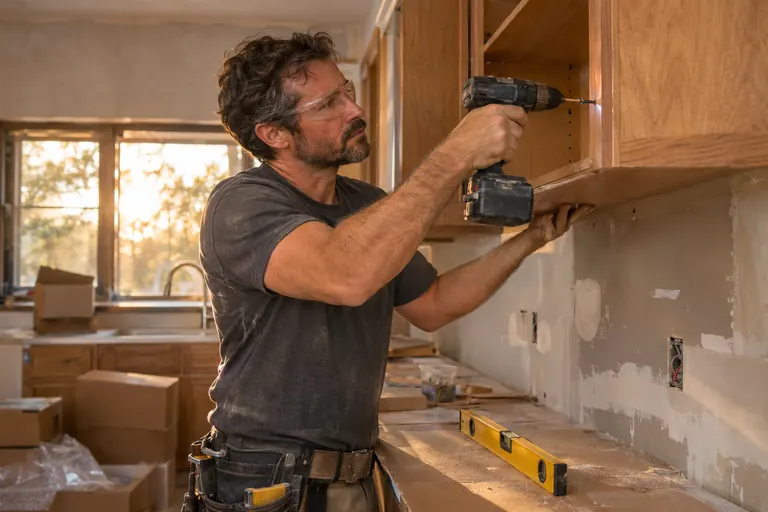
The Remodeling Customer Takes the Long Way Around
A leak gets fixed this week. A kitchen gets planned for half a year. Remodel shoppers save photos, read about costs, ask friends, and only then start calling. By the time they request estimates, most have a short list in their head.
Getting on that list is the job of remodeling SEO. If your company shows up while they’re reading about tile, layouts, and budgets, you’re a familiar name when they’re ready to talk. If you only show up for “remodeling contractor near me,” you meet them at the very end, next to three other bids.
Pages Built Around the Rooms People Redo
Google ranks one page per search, so one “Services” page can’t carry a whole remodeling company. The site needs room-by-room pages, plus a page for every town you want work in:
- Kitchen remodeling
- Bathroom remodeling and tub-to-shower conversions
- Basement finishing
- Home additions and sunrooms
- Whole-home renovations
- Aging-in-place updates, if you do them
- A page per town in your service area
Each page covers one room or project type in one area, written for how people search. “Basement finishing Nolensville” lands on your basement page with basements you’ve finished, not a homepage with a slideshow. Every website we build starts with 15–20+ pages like this, written for you. The our work page shows the layouts.
Cost and Timeline Questions Come First
Look at what remodel shoppers type before they ever ask for a quote:
- “How much does a kitchen remodel cost” and the bathroom version. These are some of the most searched questions in the trade. A page with honest ranges and what moves the price builds trust early.
- “How long does a bathroom remodel take.” People are planning around holidays, guests, and kids. A clear answer helps them pick a start date with you.
- “Do I need a permit to finish a basement.” Local rules vary, so a page written for your area is useful in a way a national article isn’t.
- Ideas and styles. “Walk-in shower ideas,” “white oak kitchen.” Broader, but these readers are early and still open to anyone.
We research which of these your towns search for and build those pages first.
Want to see it on a real remodeling site?
30 minutes. Bring your questions, get straight answers.
Get DemoTwo Ways a Remodeler Gets Found
A remodeling search shows two kinds of results, and they rank for different reasons.
The map listings. Three remodelers pinned near the searcher, with ratings and photos. Those come from your Google Business Profile, ranked by relevance, distance, and prominence. Ads can’t buy you a spot there. See Google Business Profile optimization for what helps.
The website results. Underneath sit the sites with the most useful pages for that search: cost guides, project pages, room-by-room services. On-Site SEO is the work on that side.
Remodel shoppers click around more than most. Showing up in both spots, more than once over a few weeks, is how a name sticks.
A Project Page Beats a Photo Gallery
Most remodeling sites dump every project into one gallery. It looks nice and does almost nothing for search.
Give each finished job its own page instead: the room, the town, the problem, what you changed, and a handful of photos. Now that page can show up for “bathroom remodel Brentwood,” and the homeowner reading it sees a real project ten minutes from their house. Over a year, those pages add up to proof no ad can buy.
They also make your follow-up stronger. When an estimate goes quiet, sending a link to a similar finished project is a lot better than “just checking in.” Lead Follow-Up and our guide to following up on an estimate cover that part.
Reviews Carry a Remodel Decision
A remodel means months of strangers in the house and a check with a lot of zeros. Homeowners read reviews closely, and they look for things like cleanliness, communication, and staying on budget.
Reviews help on Google too. Prominence is one of the three things the map listings rank on, and a steady stream of reviews builds it. Remodelers have fewer, bigger jobs, so every finished project should end with a request.
5-Star Review Autopilot sends that request in one click when you close out the job, and follows up if they forget. Prefer to ask in person? Here’s how to get Google reviews.
Remodeling SEO, Ads, and Lead Sites Compared
Remodeling leads are expensive no matter where they come from, so it’s worth knowing what you pay for.
Google Ads can put you on top for “kitchen remodel” today. Clicks in remodeling are costly, and many of those people are months from deciding, so you pay early and wait. Google Ads for contractors explains how to keep it in check.
Lead sites sell the same remodel lead to several companies, which pushes everyone toward the lowest bid. Compare options in Angi alternatives for contractors.
SEO works on the long research phase. A cost guide or project page you publish this year keeps getting read next year, for free.
Many remodelers mix them. Paid ads are an add-on when you want them, and cost per lead has the numbers.
The Estimate Is Where Remodels Get Lost
A remodeler rarely loses a project on the first call. It goes quiet after the estimate. The homeowner was busy, then got another bid, then forgot.
- Every inquiry answered. Lead Follow-Up has AI text new form and chat leads right away, so you get the walkthrough booked.
- Estimates that don’t go cold. One-Click Marketing Campaigns can check back in on old estimates without you writing each message.
- One inbox. All-In-One Inbox keeps texts, emails, and messages in one place, so a homeowner’s question doesn’t sit for days.
That’s why SEO comes with the rest of the platform in one plan.