
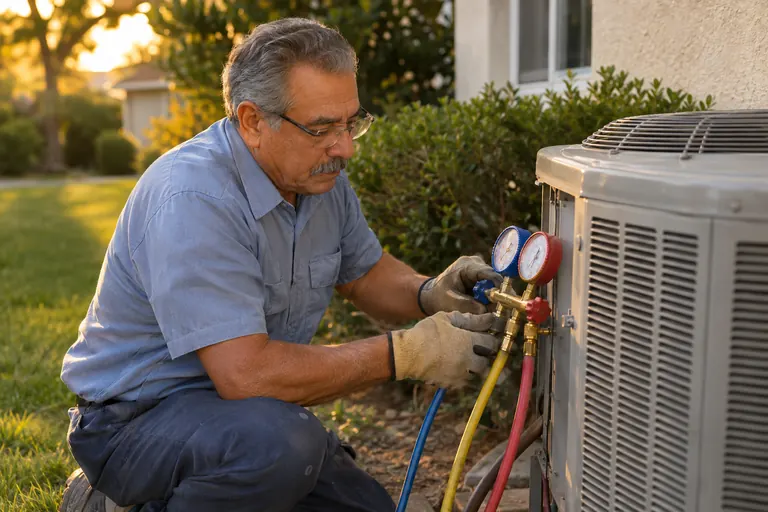
Where HVAC Jobs Go When They Don’t Come to You
A quiet week in HVAC usually has a cause you never see. A few jobs went to a lower bid. Many more went to whoever the homeowner found first on their phone.
Here’s how it usually goes. The AC blows warm air on a 95-degree afternoon. The homeowner types “AC repair near me” and calls the first company that looks open and well reviewed. If that company can come today, the job is gone. The HVAC company that wasn’t on that page never knew there was a job to lose.
Replacement work runs differently. Someone with a 15-year-old system reads about heat pumps, efficiency, and cost for weeks. Whoever’s pages they read along the way is usually who they call for the quote. The longer version is in our guide to HVAC marketing.
The Two Spots That Matter on an HVAC Search
When someone searches for AC or furnace help, Google splits the page into two parts, and you can show up in both.
The map pack. Three HVAC companies with ratings and a call button at the top. It runs off your Google Business Profile, ranked on relevance, distance, and prominence, and money can’t move you up in it. See Google Business Profile optimization for what to set up.
The organic results. The websites listed below the map, ranked on what your pages cover, how well they’re built, and who links to them. On-Site SEO looks after that part.
In a heat wave, the companies holding both spots get the first wave of calls. Everyone else waits for overflow.
The Pages an HVAC Website Needs First
Search results are made of pages, not company names. A homepage covering “heating, cooling, and indoor air quality” all at once rarely comes up for any one of them. So an HVAC site needs a page for each service and each town:
- AC repair
- Furnace or heating repair
- AC installation and replacement
- Heat pumps
- Tune-ups and maintenance plans
- Ductwork, if you do it
- Indoor air quality, if you do it
- Emergency service, if you offer it
- One page for each town you actually drive to
Each page is about one service in one town and answers what people actually search. Someone typing “heat pump installation Franklin” lands on your heat pump page, not on a homepage that buries heat pumps in a list. Every website we build has 15–20+ of these, written for you, and the our work page shows how they look.
The Searches Behind HVAC Calls
HVAC searches tend to come in four flavors, and each one is answered by a different page.
- It stopped working. “AC not cooling,” “furnace not turning on,” “AC repair near me.” These people call the first company that can come soon. Your phone number has to be the easiest thing on the page to tap.
- Replacement shopping. “AC replacement cost,” “heat pump vs furnace,” “new HVAC system cost.” They read first and get two or three quotes. A page that answers the question plainly gets you onto that list.
- Maintenance. “AC tune-up,” “furnace maintenance.” Smaller jobs, but they turn into repair work and, eventually, the replacement.
- Specific equipment. “Heat pump installation,” “mini split installation,” “ductless AC.” Smaller numbers, but these people have often already decided what they’re buying.
We check which of these your area searches most during the build, using keyword research for your towns. It’s included.
The First Hot Week and the Shoulder Seasons
HVAC runs on the weather more than almost any trade. The first heat wave or cold snap fills the schedule overnight, and then spring and fall go quiet.
Paid ads follow the thermometer, because every HVAC company turns them up at once and the price per click climbs with it. Pages that already rank don’t cost more when it’s 100 degrees. They’re just there.
The mild months are when the planned work gets decided: replacements before the next summer, heat pumps, maintenance plans. A company with decent pages picks up that research. To fill the gaps, One-Click Marketing Campaigns can send tune-up reminders to past customers before each season. More in customer reactivation for contractors.
Reviews Settle the Replacement Decision
A new system is one of the bigger checks a homeowner writes, and a repair means trusting a diagnosis they can’t check. So they read reviews, and they look for things like honest quotes and techs who didn’t upsell.
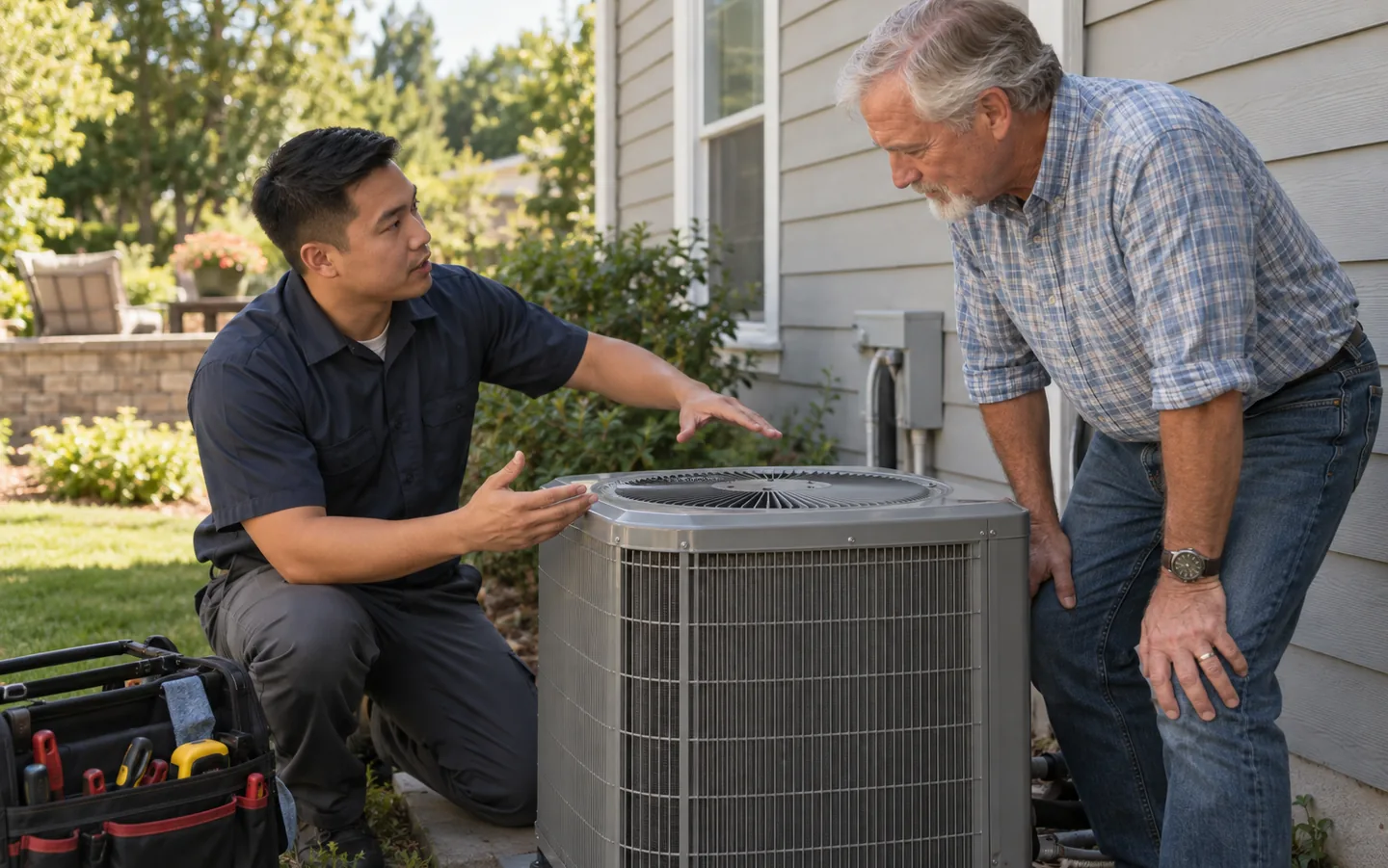
Reviews also feed Google’s local map, since prominence is one of the three things it ranks on. HVAC companies that ask after every service call build a steady stream, which helps most in the busy months when everyone is comparing.
The hard part is asking on a 12-call day. 5-Star Review Autopilot handles the request and the follow-up in one click. If you’d rather ask yourself, here’s how to get Google reviews.
HVAC SEO, Paid Ads and Lead Services
A side-by-side, so you can weigh it yourself.
Google Ads and Local Service Ads switch on fast, which helps when you have open slots. They also switch off the minute you stop paying, and clicks get pricier the hotter it gets. More on Google Local Services Ads and Google Ads for contractors.
Lead services hand the same homeowner to several HVAC companies at once, which turns every lead into a race. We looked at the options in Angi alternatives for contractors and is Thumbtack worth it.
SEO is the slow one. It doesn’t care about the thermometer or your ad budget, and the lead is yours.
Plenty of HVAC companies run all three. With a site that ranks and converts underneath, the ads cost less per job. Paid ads are an add-on when you want them. SEO vs. PPC and cost per lead go into the numbers.
A Top Ranking Still Needs Someone to Pick Up
In peak season the phone rings while every tech is in an attic. That’s exactly when HVAC jobs slip away, so search is wired into the rest of the platform.
- Missed calls. Missed-Call Text-Back has AI text the caller within seconds, which keeps a homeowner with no AC from calling the next company.
- Forms and chat. Lead Follow-Up answers every web lead right away, even after hours.
- The business line. Business Phone keeps company calls off your personal cell.
That’s why SEO here is one part of the platform, not a standalone service. See contractor lead follow-up for the reasoning.