HVAC Marketing: A Different Message for Every Kind of Call
A broken system in a heatwave, a replacement planned for autumn, and a routine maintenance reminder can all involve the same equipment. For the customer, they are three different decisions.
On This Page
The weather changes demand. It does not explain every inquiry
An HVAC company has a full week whenever the temperature spikes. Calls come in, technicians move between jobs, and the office tries to keep promises it can meet. Two weeks later, the rush fades and the calendar looks different.
The obvious response is to spend more on advertising during quiet periods. Sometimes that makes sense. But it misses an important distinction: emergency repair, considered replacement, and maintenance have different buyers, lead times, and follow-up needs.
Good HVAC marketing gives each customer a clear route from their immediate problem to the right conversation. The goal is not to make every week look like a heatwave.
Repair customers need clarity before polish
When the air conditioning fails, a homeowner may scan several local businesses in minutes. A good-looking website helps only if the person can quickly see whether you handle the problem, cover the address, and can be contacted now.
Service hours need to be true. If you do not dispatch after hours, do not use “24/7” because a competitor does. An after-hours caller can still be told when to expect a response and what information to leave. That is more useful than an automatic promise of immediate attendance the team cannot keep.
The handoff from search to phone also matters. Paying for a repair inquiry that becomes an unreturned voicemail is paying for an introduction and throwing away the conversation. Our articles on Google Local Services Ads and after-hours answering examine those two stages.
Picture the hottest afternoon of the week. The office receives six calls about cooling failures, but the team can handle only two additional visits. Advertising can keep sending requests; it cannot create technicians or appointment time. The useful customer response now is an honest account of availability, not a vague promise designed to keep every caller on the line.
That is why call handling belongs in the marketing plan. It affects the experience of every person the campaign attracts. It can also tell the business when to shift attention from urgent repair inquiries toward work that can be scheduled later.
Replacement work is a slower sale
A homeowner considering a new system may be thinking about comfort, age of the existing equipment, installation disruption, and what the quoted scope includes. They may speak to several businesses. Their decision is rarely the same as choosing who can repair a breakdown today.
An HVAC replacement page should demonstrate the work and explain the assessment: what you inspect, what choices need discussion, what an estimate includes, and what happens after the visit. A stock photo of a smiling family and the phrase “premium comfort solutions” do little to answer those questions.
The estimate itself needs a clear next step. A homeowner may want to understand why one proposed system differs from another. A follow-up that refers to that choice is more useful than a message asking, “Have you decided yet?” Our estimate-follow-up article looks at how to continue that conversation without turning it into a chase.
The replacement estimate needs a story a customer can follow
Imagine two proposals landing in a homeowner's inbox. One is a price and a model number. The other explains what the team observed, what is included in installation, what work may depend on the existing setup, and who can answer questions. A lower price may still win, but the second proposal gives the customer something concrete to compare.
The website can begin that education before the visit without pretending to quote an unseen house. A project example might show the former system, the challenge the homeowner described, the work completed, and the result the company can honestly describe. It does not need a claim that every installation will save a particular percentage on energy bills. Those claims would depend on equipment, use, building conditions, and other factors the page cannot know.
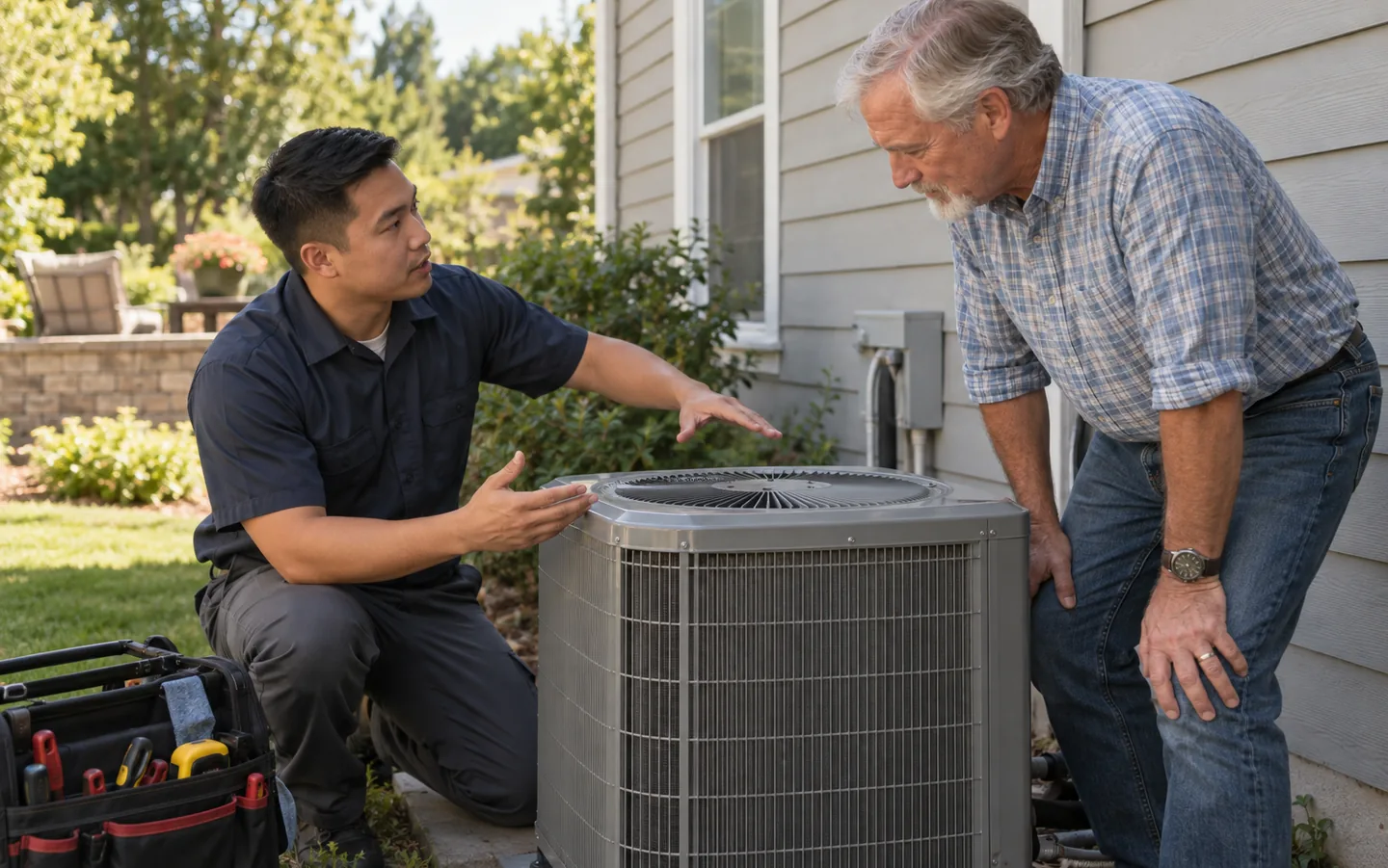
This is also where a strong photograph earns its place. A technician beside a generic air-conditioning unit is atmosphere. A documented installation with a short explanation is evidence of the work a customer is thinking about buying.
Maintenance is a relationship, not a panic campaign
Maintenance demand does not have to be invented with “last chance” language. A customer who hired you before may have a real reason to hear from you when seasonal service becomes relevant.
That message should reflect the customer record. Did the team complete a service visit, install equipment, or discuss a future check? Was there an unresolved complaint? A generic annual blast ignores these differences. It can remind people of a business; it can also remind them that the business has forgotten what happened.
A useful campaign is specific about the service and the next step. It does not claim that every customer urgently needs work. The customer retention article explains why the contact rhythm should follow the work, while customer reactivation focuses on people who have gone quiet.
Make the website reflect the work you want
Suppose a company wants more replacement projects but its homepage gives equal space to every small repair it has ever done. Its advertising may bring visitors to a generic page that never shows an installation or explains the assessment. The problem is not only traffic; it is what the visitor finds after arriving.
Service pages can separate repair, replacement, and maintenance where the customer questions genuinely differ. Those pages should use language a homeowner recognizes, show real work when available, name the areas served, and offer the appropriate next step. A repair customer may need a phone number immediately. A replacement customer may want to request an assessment.
These are different paths through one business. The website should help customers find the right one without making the owner maintain dozens of thin, repetitive pages. Our contractor website examples show what that distinction looks like on a page.
Know what the busy phone is bringing you
A campaign can make the phone ring and still leave the business disappointed. Perhaps the calls are for services you no longer offer. Perhaps the address is outside your practical area. Perhaps repair requests arrive during hours you cannot cover, while the replacement calendar stays empty.
Track suitable inquiries by service and source through the next stage: contact made, assessment arranged, estimate sent, job accepted. Cost per lead alone will not reveal a missed callback or a poor fit. Capacity matters as much as the ad budget: a business cannot credibly sell rapid service into a schedule that is already full.
The right response could be clearer service pages, a different advertising focus, better call coverage, or a follow-up process. Those decisions should come from the pattern of real inquiries, not from weather or click counts alone.
Quiet months call for a different offer, not a louder emergency ad
An HVAC company with capacity outside peak repair weeks may be tempted to repeat its emergency message more often. That cannot make homeowners have more breakdowns. A better commercial question is which planned work people already have reason to discuss: a replacement they delayed, a service visit related to equipment the team installed, or a question that remained open after a repair.
That decision starts with the customer history. The business should know whether a person owns the system, rents the property, accepted an earlier quote, or asked to be contacted later. It should also know whether the team can actually perform the advertised work during the proposed period. A seasonal campaign that fills the calendar with unsuitable visits is not a win.
Our customer reactivation article looks at how to reopen a relevant conversation without pretending every past customer needs the same thing.
SystemsPal can connect website pages, a business phone, missed-call response, and customer follow-up. Your field schedule, dispatch, and technical scope need to be considered separately.
Book a Call and tell us which HVAC work you want to win more often: repairs, replacements, maintenance, or a better mix. We'll look at the customer's route to your business and what happens after they reach you.