Social Media Marketing for Contractors: Give People a Reason to Remember Your Work
A finished-job photograph can do more than fill a feed. Show the decision behind the work, answer a real homeowner question, and make the next step easy to understand.
On This Page
The photograph is good. The caption gives it nothing to do
You finish a fence, take a photograph, and post it with “Another happy customer!”
There's nothing wrong with showing completed work. But a homeowner looking at the photograph may have a leaning fence, a narrow access route, or a dog they need to keep safely inside. Your caption doesn't help them recognize whether you solve their problem.
The missing piece isn't a better slogan. It's one useful detail.
“The old gate dragged across uneven paving. We rebuilt the opening and adjusted the clearance so it swings freely without leaving a large gap underneath.” Now the photograph has a story a prospective customer can understand.
Social media marketing for contractors works best when it makes relevant work recognizable, shows how the business thinks, and gives interested people a clear route to contact. Attention alone doesn't do those jobs.
Three posts with a reason to exist
The following captions are original examples. Their details must match the actual project before a business uses them.
1. Show the problem, then the finished work
For a gate replacement, the finished photograph is stronger beside a before photograph and a concise explanation:
This gate looked serviceable until you tried to open it. The hinge side had dropped, so the bottom caught the paving. We replaced the damaged posts and rebuilt the gate to suit the opening. The owner now has an entrance they can use without lifting it every time. Planning a gate repair or replacement in our service area? Send us a message with the location and what’s happening.
The explanation tells the reader what the company addressed. It doesn't ask the homeowner to diagnose the construction problem or assume the same solution suits every gate.
2. Answer the question people ask before buying
A painting company might show a close-up of preparation alongside the finished elevation:
Why does one exterior-painting estimate cost more than another? Sometimes the difference is underneath the paint. On this property, the work included removing loose material and repairing damaged areas before the finishing coats. When we discuss a project, we explain the preparation included so you can compare the scope as well as the total.
That post creates a buying question worth discussing. It also makes an estimate feel less like an unexplained number.
3. Explain a choice the homeowner can recognize
For a garden project:
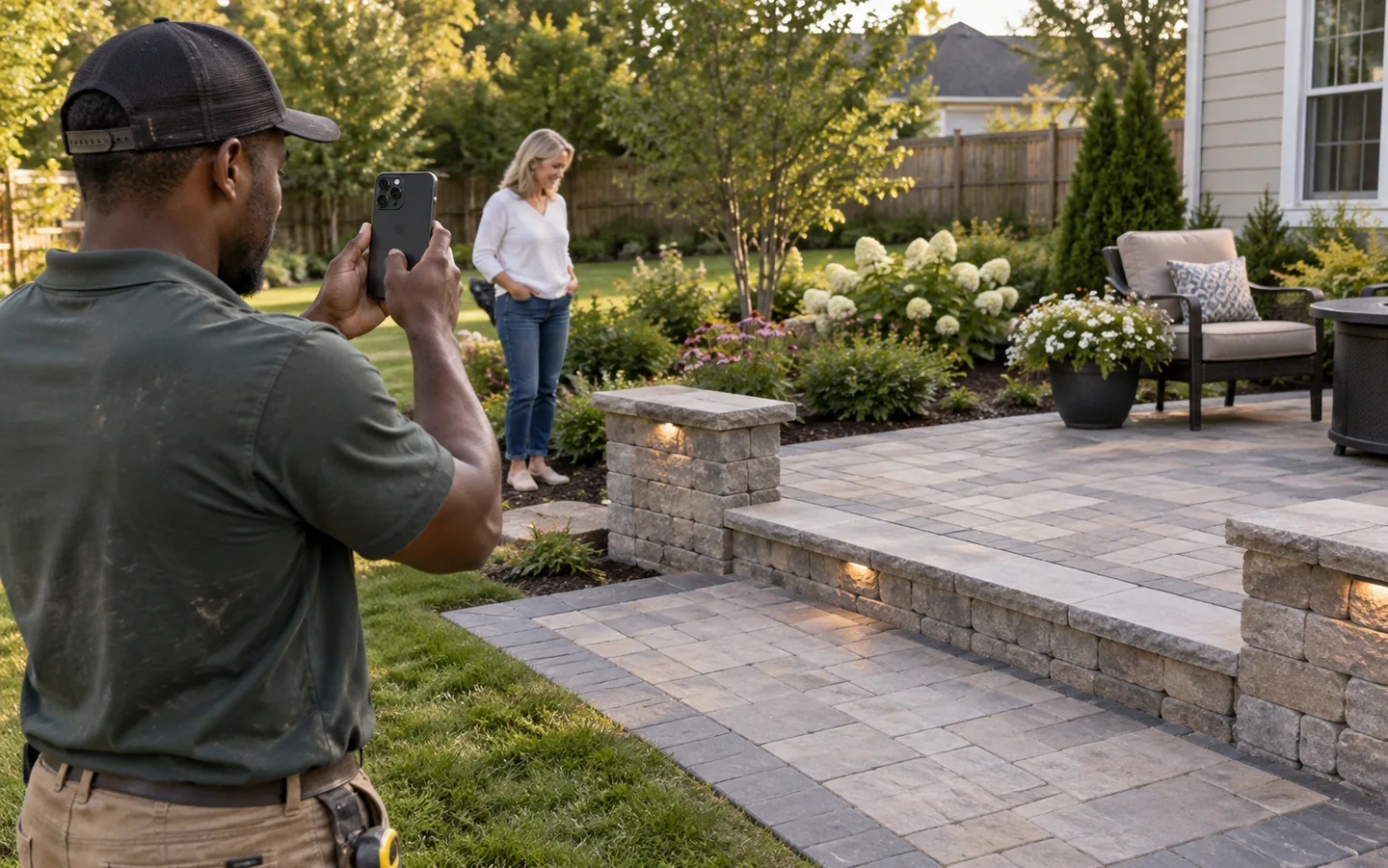
The brief was a place to sit outside without turning the entire garden into paving. We kept the planting area and sized the patio around the seating the owners wanted to use. These photographs show the route from the back door and the space around the table. Thinking about a similar change? Tell us how you want to use the garden.
Specificity is doing the selling. The business doesn't need to claim that every installation transforms a customer's life.
Show the work behind the attractive result
Before-and-after posts are useful, but not every trade produces a dramatic visual transformation. Some of the most valuable work is largely hidden when complete.
A service company can explain the issue the customer noticed, the assessment, and the outcome in language the homeowner understands. A builder can show a planning decision, access constraint, or stage of work that mattered to the finished project.
People are part of that story too. A crew member explaining a choice or the owner checking a finished detail can make the business easier to recognize. Those photographs should arise from real work rather than a repeated stock image of somebody holding a tablet.
The material also needs permission and judgment. Customer names, addresses, children, vehicle plates, and private interior details don't have to appear for the project to be persuasive. Approval to use a project photograph should be settled before publication.
Give the reader a manageable next step
A person admiring a kitchen renovation may be months away from a firm decision. Someone looking at a broken gate may want help this week.
The invitation should fit. “Tell us what you'd like to change and where the property is” makes sense for an initial conversation. Promising an exact price from a single photograph may create expectations the team cannot meet.
A relevant service page can carry the explanation beyond the post: what the company does, the area served, project examples, and how the inquiry is handled. The post and the page should describe the same service.
Avoid sending every interested person to a vague homepage and leaving them to find the subject again. The destination should continue the conversation they have already started.
Who answers the message?
Social media can create a communication problem when a promising request sits in an account nobody checks.
Someone needs responsibility for replies, enough information to answer sensibly, and a place to record what was agreed. A request for a site visit should reach the person arranging visits. A complaint from an existing customer needs a different response from a new sales inquiry.
SystemsPal's shared inbox and customer records support organized customer communication. The specific social channels and account connections required should be confirmed during setup.
The important outcome is that the customer doesn't have to start over when the conversation moves from a message to a phone call.
A workable content arrangement beats a burst of posts
Posting ten times after a busy project and then disappearing for three months rarely gives prospective customers a clear picture of current work.
A managed arrangement should explain who captures photographs, who gathers the relevant project details, who writes, and who approves publication. A content provider cannot accurately describe preparation or access constraints from a polished final photograph alone.
Useful project information is modest: what the customer needed, the decision that mattered, the broad location if appropriate, and which images are approved. It can support a focused post without demanding an essay from the contractor after every job.
There is no universal posting frequency that guarantees inquiries. Enough relevant material to show the business and its work is a better starting point than a daily quota filled with unrelated tips.
Judge the conversations, not just the applause
Likes can show a reaction. They don't tell you whether the audience includes people you can serve or whether the work suits the business.
Look at inquiries about the service, questions asked before booking, visits to relevant pages where measurable, and the jobs that follow. Also ask customers how they encountered the company. Some will say a neighbor recommended you and the project photographs helped them decide.
That is useful evidence even if the social platform doesn't take credit for the booking. The wider contractor marketing system should make those contributions easier to understand.
Book a Call to see how SystemsPal connects your website, incoming messages, and follow-up. When somebody likes your work enough to ask about it, the conversation should have somewhere useful to go.